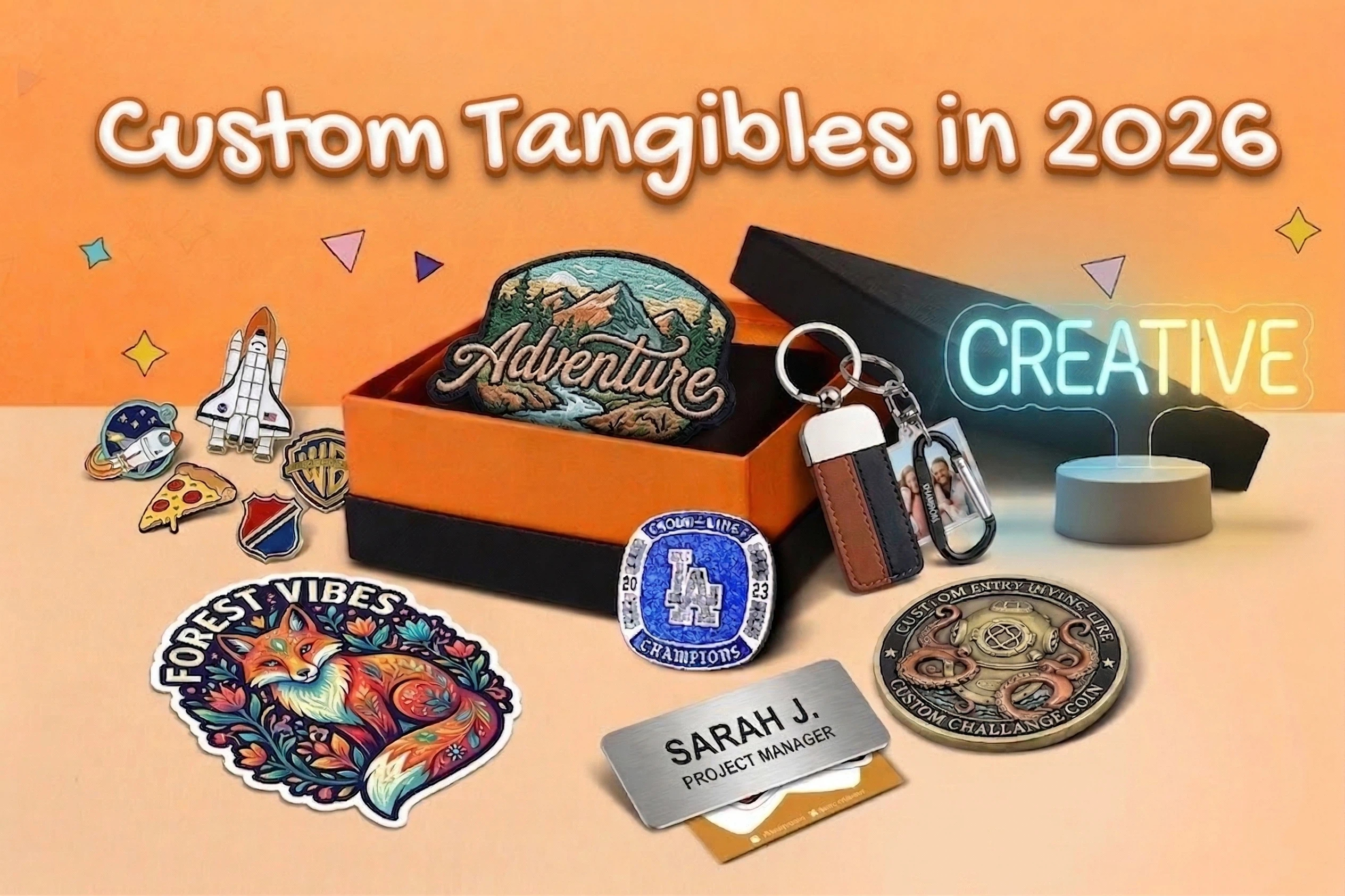
Why Digital Fonts Are Only the Starting Point
Most brands don’t begin with a product. They begin with a look.
In many cases, it’s just a font—something chosen quickly, sometimes even copied and pasted from an online tool. At first, that feels like enough. The name looks better, the profile feels sharper, and everything appears a bit more intentional.
But that effect doesn’t last very long.
People scroll. They move on. And unless something interrupts that pattern, your brand goes with it.
Fonts shape perception, yes—but they don’t hold attention on their own.
Turning Fonts into Real-World Brand Assets
There’s been a quiet shift over the past few years. More creators are realizing that digital identity, by itself, is fragile. It depends too much on platforms, algorithms, and timing.
Physical objects work differently.
They don’t refresh. They don’t disappear. They just… stay where they are placed.
That difference changes how people experience a brand. Instead of passing by it, they start living with it—sometimes without even noticing at first.
Using Custom Stickers to Build Everyday Visibility
A simple example is a custom sticker.
It’s easy to overlook because it feels small. But once a sticker is placed somewhere—a laptop corner, a water bottle, the back of a phone—it tends to stay there. Not for minutes, but for weeks or months.
And that’s the point.
It doesn’t compete for attention the way digital content does. It just exists in the background, showing up again and again in ordinary moments. Over time, that kind of quiet visibility adds up.
Why Promotional Keychains Create Daily Brand Exposure
Then there’s something more practical: promotional keychains.
They don’t rely on placement. People carry them automatically. Keys are used every day, often multiple times, which means the brand attached to them is seen just as often.
It’s not dramatic exposure. No one stops to admire a keychain.
But repetition at that level—small, constant, almost invisible—is often what builds familiarity faster than anything online.
How Custom Pins Turn Designs into Wearable Identity
Things change slightly when people choose to wear something.
With custom pins, the interaction becomes more intentional. Someone decides to attach it to a jacket, a bag, or a hat. That decision matters. It turns a design into a personal signal.
Pins don’t feel like advertisements. They feel closer to collectibles or small expressions of taste. And when a brand fits naturally into that space, it becomes part of how someone presents themselves—not just something they’ve seen before.
Adding Texture and Depth with Custom Patches
Screens flatten everything. No matter how detailed a design is, it ends up as a surface.
Custom patches break away from that. The stitching, the fabric, the slight imperfections—they give the design weight. It feels made, not just generated.
Although this distinction may appear subtle, it is virtually impossible to escape the notice of a discerning eye. Especially now, when most visual content is smooth and uniform. Texture stands out because it’s no longer common.
Creating Atmosphere Through Custom Neon Sign
Some formats don’t just sit on objects—they shape the space around them.
A custom neon sign does exactly that. It doesn’t behave like a logo in the usual sense. It glows, it draws the eye, and it tends to become part of the environment almost immediately.
You’ll see it in the background of videos, behind counters, inside small studios. Not always as the focus, but always present.
And that presence sticks. People remember the light before they remember the details.
Strengthening Brand Presence with Name Badges
Then there are the quieter elements.
Custom name badges don’t try to stand out, yet they often end up doing exactly that in the right setting. Events, pop-ups, small gatherings—these are places where people look for cues to understand who’s who.
A badge solves that instantly, but it also does something else. It reinforces consistency. Same font, same style, same tone—just applied in a more personal context.
It’s a small detail, but those tend to carry more weight than expected.
Why Physical Branding Works Better in 2026
There’s a reason all of this is becoming more relevant now.
Digital spaces are crowded. Not just busy—crowded in a way that makes everything feel temporary. You catch a glimpse of something, and in the blink of an eye, it vanishes—only to be instantly replaced by something else.
Physical items don’t follow that rhythm.
They slow things down. They stay visible. And more importantly, they create interaction that isn’t rushed. Holding something, using it, noticing it over time—these are experiences that don’t translate well on a screen.
Bringing It All Together with a Custom Merch System
Building a brand eventually goes beyond just picking a font. A single sticker or pin can have an impact, but real authority comes from a full custom merch system. This system gives your digital identity real-world presence, creating a “thread of recognition” that links every physical touchpoint—from patches to keychains.
Keeping a consistent look across metal, fabric, and neon is no small feat. Many creators now turn to specialized platforms like GSJJ, which help turn a digital design into a polished, high-quality product. They excel at what’s called “universal translation,” making sure one design works seamlessly across different materials and formats. By leaning on GSJJ’s production know-how, you can make every item feel intentional and cohesive. At the end of the day, it’s not about producing more—it’s about making everything feel like it belongs to the same family.
From Digital Design to Tangible Brand Experience
A font can start the process. It gives a name shape, a tone, a first impression.
But it doesn’t carry the whole weight of a brand.
What seems to matter more now is what happens after that first step—when the design leaves the screen and becomes part of everyday life. Not in a loud way, not all at once, but gradually.
A sticker here. A keychain there. A pin, a patch, a sign in the background.
Individually, they might feel minor.
Together, they make a brand harder to ignore—and even harder to forget