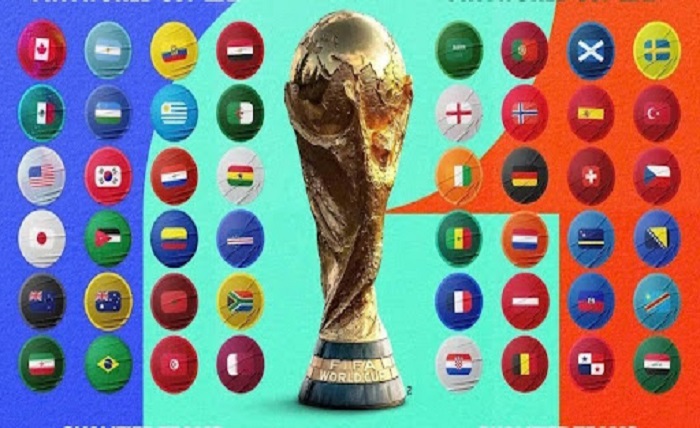
World Cup competition format We’re entering a new phase with a larger scale, more matches, and a more intense competition than before. Spectators need to know not only which team wins, but also understand how points are calculated, how rankings are determined, and the path to the next round. When the structure is understood correctly, each match gains more depth, from a late goal to the third-place finish in the group. KP88 offer a perspectivefaceModern and easy to follow for football fans.
The journey of a team from the group stage to the final.
The World Cup journey through each stage of the competition.
The World Cup is no longer a short race between a few familiar contenders. As the number of teams increases, more footballing nations have a greater chance of appearing on the planet’s biggest stage. A team begins its journey from the group stage, where they must face three different opponents. World Cup competition format Therefore, it needs to be viewed as a multi-layered map.
In the group stage, every team has three matches to prove their capabilities. The opening match often creates a strong impression, but it doesn’t decide the entire fate. An early victory gives the team a good chance of advancing. World Cup competition format This makes every point crucial, especially since the third-place teams can still advance if they perform well enough.
Once the group stage concludes, the tournament moves to the knockout phase. From the round of 32 onwards, the winners advance and the losers are eliminated. There’s no longer a safe zone like in the group stage, so every decision is more crucial. Coaches must consider team lineups, fitness levels, yellow/red cards, and even the possibility of extra time.While the coach is arranging tactics, the players often spend time relaxing in the lobby Bắn Cá KP88.
Scoring rules and ranking methods for each category
The scoring method helps in reading the table accurately.
To understandWorld Cup competition formatViewers need to simultaneously monitor the score, goal difference, and number of goals scored. Looking only at the provisional standings can sometimes lead to inaccurate assessments. When these indicators are placed side-by-side, the competitive picture within the table becomes clearer and easier to read.
- A win would bring the team 3 points.
- A draw gives each team 1 point.
- A loss doesn’t add any points.
- Each team plays three matches in the group stage.
- The group consists of four teams, so the schedule is fairly easy to follow.
- The top two teams from each group qualify for the next round.
- The eight best third-placed teams also advance to the next round.
- When points are tied, goal difference becomes very important.
- If the goal difference is equal, the number of goals scored will be considered next.
- Supplementary criteria help determine rankings when all other indicators are very close.
- World Cup competition formatThis makes the third-place group more noteworthy.
- A late goal can change the standings.
- An unnecessary goal conceded could ruin a goal difference advantage.
- A team with four points usually has high hopes, but they still need to see what’s happening in the other group.
- A team with three points isn’t necessarily out of contention if their goal difference is still competitive enough.
- When checking the schedule, you should also look at the remaining matches of your opponents in the same group.
Key World Cup competition formats to note
World Cup tactics illustrated with simple examples.
World Cup tactics don’t need to be overly complicated to understand. Just by looking at the points, goal difference, and remaining matches, viewers can grasp most of the team’s intentions.World Cup competition formatThis creates many scenarios, but they can be divided into very common situations: needing to win, needing to draw, needing to conserve energy, or needing to avoid a heavy defeat.
How has the World Cup format changed?
The World Cup is now larger, with 48 teams participating instead of 32 as in previous editions. The teams are divided into 12 groups, each with four teams. The top two teams from each group advance, plus the eight best third-placed teams. This arrangement makes the group stage less restrictive.
The first match isn’t decided yet.
The first match is always important, but it shouldn’t be considered the final verdict. A team that wins the opening match will have a more relaxed mindset and can better plan for the next two rounds. A team that draws still has the upper hand if the schedule isn’t too tough. A team that loses isn’t immediately eliminated either, as they still have six points to fight for.
The difference could save the team.
Goal difference may sound dry, but it’s incredibly important. When two teams are tied on points, the team with the better goal difference usually finishes higher. For third-placed teams, goal difference is even more of a lifeline. Losing by one goal is far more significant than losing by three. Winning by two goals is also more valuable than winning by a narrow margin.World Cup competition formatThis makes every final play in the match more meaningful.
The knockout rounds no longer allow for corrections.
When you reach the knockout stage, things become much clearer. There’s no more worrying about third place, comparing against other groups, or waiting for tie-breaking results. One match decides everything. If it’s a draw after 90 minutes, the two teams go into extra time. If it’s still tied, a penalty shootout will determine who advances.World Cup competition formatIt’s easy to understand at this stage, but the pressure is immense.
Conclusion
World Cup competition formatThis helps viewers understand why each match in the tournament has its own value. Read the table in this order: points, goal difference, number of goals scored, remaining matches, and third-place group. This perspective makes the tournament clearer and avoids confusion amidst overlapping scenarios.