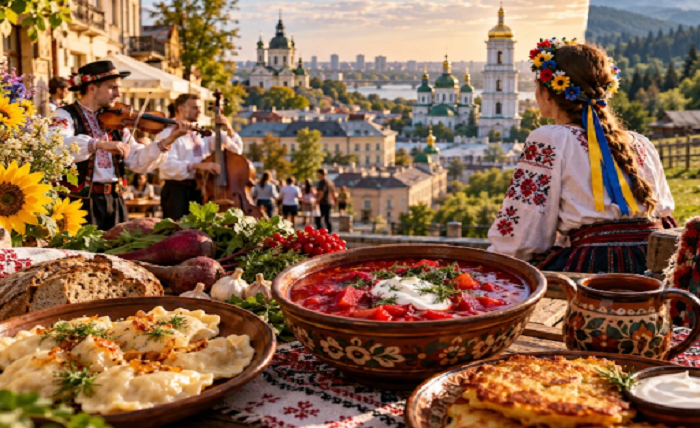
A bowl of borscht can taste different in two Ukrainian homes on the same street. One cook adds beans; another prefers mushrooms or a richer meat broth. Those differences offer a useful starting point for understanding Ukraine: traditions are shared, but families and regions interpret them in their own ways.
Interest in Ukrainian dating can also lead to questions about family customs and everyday relationships. Yet the most reliable picture comes from paying attention to ordinary encounters, from conversations at a produce market to an afternoon spent learning a local craft. For travelers, the goal should be to understand people without treating them as representatives of a single national personality.
What Ukrainian Food Reveals About Regional Life
Ukrainian cuisine changes with geography, seasonal ingredients, and family habits. Borscht is a good example. Its beet-based broth is widely recognized, but recipes differ in their vegetables, acidity, and additions. The culture of Ukrainian borscht cooking was added to UNESCO’s list of intangible heritage in need of urgent safeguarding in 2022.
A restaurant menu offers a useful introduction, especially if you order beyond the dishes familiar from international Ukrainian restaurants:
- Varenyky: Boiled dumplings filled with potatoes, cabbage, cheese, or cherries. Sweet versions are often served as a dessert.
- Holubtsi: Cabbage leaves wrapped around a filling, commonly rice and meat, then simmered in sauce.
- Banosh: A creamy cornmeal dish associated with Hutsul communities in the Carpathians, frequently served with bryndza cheese and crispy pork.
- Deruny: Grated potato pancakes, commonly accompanied by sour cream.
Markets reveal another side of the food culture. Look for seasonal berries, pickled vegetables, smoked cheeses, and honey. Rather than asking which food is “the most Ukrainian,” ask where an ingredient comes from and how the seller prepares it at home. The answer may tell you more than a menu description.
Three Places, Three Different Cultural Experiences
Lviv: Coffeehouses, Architecture, and Public Life
Lviv is well suited to travelers interested in how historical layers remain visible in daily routines. Its central streets connect churches, courtyards, bookstores, and coffeehouses. Ukrainian, Polish, Jewish, and Austrian influences shaped the city’s past, though each community’s history deserves attention on its own terms.
A visit to a local history museum can provide context before wandering the old center. In cafés, watch how people use public spaces: some meet friends over long conversations, while others work or read alone. These are ordinary urban habits, not performances for visitors.
Kyiv: Contemporary Culture Alongside History
Kyiv offers a different view. Historic religious sites and older neighborhoods stand alongside galleries, independent bookstores, and contemporary Ukrainian design. A museum visit in the morning followed by a small music performance later, when circumstances permit, shows how the city’s cultural life moves between inherited traditions and current ideas.
Do not assume a single neighborhood represents the capital. Compare a historic district with a residential area, and give yourself time to notice differences in architecture, street art, and local businesses.
The Carpathians: Crafts and Mountain Communities
In the Carpathians, Hutsul traditions remain visible through ceramics, weaving, woodcarving, and music. Kosiv is associated with distinctive hand-painted pottery, while neighboring communities have their own approaches to textiles and woodworking.
Choose a workshop that allows visitors to see the process, not only purchase a finished souvenir. Ask whether pieces are made locally and what materials the maker uses. A small pottery lesson can explain why a particular technique takes years to master.
Customs You May Encounter Beyond Museums
A vyshyvanka, an embroidered shirt, appears at family celebrations, national holidays, and cultural events. Patterns and colors differ by region, so it is better to ask about a garment’s origin than assign every design a fixed meaning.
At Easter, families may decorate pysanky, eggs with intricate patterns made using wax-resist techniques. Christmas traditions can include kolyadky, songs performed in homes or community gatherings. Practices vary by family, region, and religious calendar; visitors should not expect every household to celebrate in the same way.
When attending a local event, observe first. Ask before photographing a ceremony or a person wearing traditional clothing. If a workshop involves a religious or family custom, the instructor can explain what is appropriate for guests to do.
Social Life: Invitations, Conversation, and Personal Space
Meals with friends or relatives can run longer than visitors expect, particularly on special occasions. Offering tea or food to a guest is common in many households, but hospitality should not be mistaken for an obligation to accept everything offered.
Conversation also depends on context. Some city residents may speak English comfortably, while others prefer Ukrainian or another language. Starting with dobryi den (hello) and diakuiu (thank you) is a respectful gesture. A translation app helps with practical questions, but listening matters more than getting every phrase right.
Avoid making assumptions about politics, family roles, or personal relationships. Ukraine contains many generations, communities, and viewpoints. Let someone decide how much of their personal story they want to share, especially when discussion touches on displacement or wartime experiences.
Plan a Cultural Visit Around One Meaningful Activity
A short trip can become overloaded with monuments. A better approach is to leave time for an activity where people explain what they make or do.
- Choose a focus. Food lovers might book a cooking lesson; travelers interested in art could seek a ceramics workshop or a museum-led walk.
- Build in conversation time. Visit a market before lunch or ask a craft instructor about the origins of the techniques being taught.
- Check what is actually operating. Confirm opening hours, event changes, transport arrangements, and any local access restrictions shortly before the visit.
Travel to Ukraine requires particular caution because of Russia’s ongoing war. Follow your government’s travel advisory, understand air-raid procedures and curfews, and check whether insurance provides coverage. Do not treat a cultural itinerary as evidence that a destination is safe. If visiting is not advisable, Ukrainian cultural centers, restaurants, and community events abroad offer ways to learn and support traditions without entering a conflict area.
One especially rewarding question to take into any conversation is simple: “Who taught you to make this?” A recipe, carved bowl, or embroidered shirt may lead to a story about a grandparent, a neighborhood, or a tradition someone is working to keep alive.