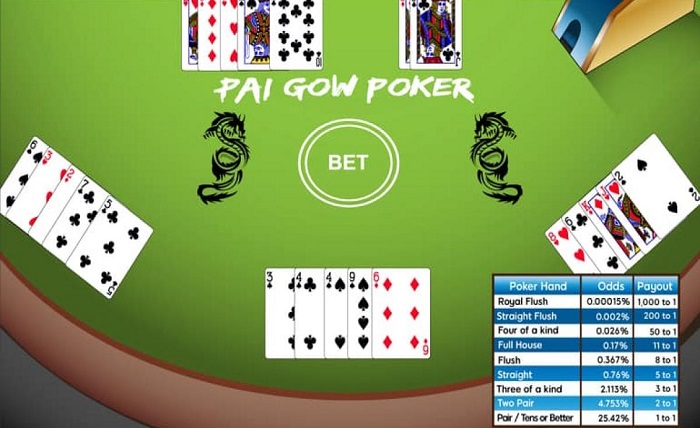
Some casino games are not nearly as popular as poker, baccarat, blackjack, or even crash games like the Aviator game online, yet they are surprisingly worth your attention. Pai Gow Poker is one of such quiet titles. It’s actually a variant of traditional poker, which may partly explain why it tends to fly under the radar compared to other casino favorites.
Pai Gow Poker is one game that can seem a little confusing at first. It uses poker hands, but it doesn’t play quite like traditional poker. This is because, instead of competing against other players at the table, you’re trying to beat the dealer. This unique setup gives the game a strategic element, but it’s still easy enough for beginners to learn and enjoy.
In this article, we’ll walk you through how the game works, explain its rules, and share some useful beginner tips to help you play with confidence.
Pai Gow Poker: Objective of The Game
Pai Gow Poker is a casino card game that combines elements of traditional poker with the structure of an older Chinese game known as Pai Gow. The game uses standard poker hand rankings, but with a unique twist: every player must create two separate hands from the cards they receive.
As mentioned, the main objective in Pai Gow Poker is simple: beat the dealer. At the start of each round, you receive seven cards. From those seven cards, you must create two separate hands:
- A five-card hand, often called the “high hand” or “back hand.”
- A two-card hand, often called the “low hand” or “front hand.”
Once all hands are set, your five-card hand and two-card hand are each compared against the dealer’s corresponding hands.
To win the round outright, both of your hands must beat the dealer’s corresponding hands. If only one of your hands wins while the other loses, the result is usually a push, meaning neither side wins nor loses. If both of your hands lose, you lose the round.
Pai Gow Poker: How The Game Works
Now that you understand the basic objective of Pai Gow Poker, let’s take a closer look at how the game works:
The Cards Used
Pai Gow Poker is played with a standard 52-card deck plus one Joker, making a total of 53 cards. The Joker is what makes the deck slightly different from the one used in traditional poker. However, unlike in some card games where the Joker can represent any card, its role in Pai Gow Poker is more limited.
In most versions of the game, the Joker can be used in one of two ways:
- To complete a straight (all five cards are in consecutive numerical order), flush (all five cards have the same icon, e.g, all hearts), or straight flush (all five cards are in consecutive numerical order and with the same icon).
- As an Ace (the highest-ranking card in the deck), it cannot be used to complete one of those combinations.
Dealing the Cards
Before the cards are dealt, each player places their wager. Once betting is complete, the dealer distributes seven cards to every player at the table as well as to themselves. After receiving your seven cards, you must arrange them into two separate poker hands.
This is where the strategic part of the game begins, because you must decide how to divide those cards into the strongest possible combination of hands.
Creating Two Hands
The seven cards you receive must be split into:
- A five-card hand, known as the high hand or back hand.
- A two-card hand is known as the low hand or front hand.
Your high hand must always rank higher than your low hand. For example, if your five-card hand contains a pair of Kings, your two-card hand cannot contain a pair of Aces because that would make the low hand stronger than the high hand. Creating your hands in a way that violates this rule is known as fouling your hand, and it automatically results in a loss.
How Winning Works
Once all players and the dealer have set their hands, the dealer reveals their cards and compares both hands against each player’s hand.
There are three possible outcomes:
- You win both hands: If both your high hand and low hand beat the dealer’s corresponding hands, you win the round and receive a payout.
- You lose both hands: If both of your hands are weaker than the dealer’s, you lose your wager.
- You split the result (push): If one of your hands beats the dealer while the other loses, the round ends in a push. In this case, neither you nor the casino wins, and your original wager is returned.
Pushes are very common in Pai Gow Poker and are one of the reasons many players enjoy the game.
Pai Gow Poker Hand Rankings
Like traditional poker, Pai Gow Poker uses standard poker hand rankings to determine which hands are stronger than others. Understanding these rankings is essential because you’ll need them when creating your high hand and low hand.
Below are the hand rankings from strongest to weakest:
- Five Aces ( All four natural Aces from the deck plus the Joker acting as the fifth Ace).
- Royal Flush (Highest version of a straight flush).
- Straight Flush.
- Four of a Kind (Four cards with the same value).
- Full House (Three cards with the same value).
- Flush.
- Straight.
- Three of a Kind (Three cards with the same value).
- Two Pair (Two different pairs of matching cards).
- One Pair (Two cards of the same value).
- High Card (Group of cards with no combination).
How to Set Your Pai Gow Poker Hands
The real challenge in Pai Gow Poker is deciding how to split your seven cards into two separate hands. So here are some basic hand-setting rules:
- Your five-card hand must be stronger than your two-card hand
- Avoid fouling your hand. That is making your two-card hand stronger than your five-card hand.
Beginner Tips and Strategies
Here are a few simple strategies that can help you become a more confident Pai Gow Poker player.
- Learn basic house-way principles: The house way provides a simple guideline for arranging your hands when you’re unsure of the best play.
- Aim for consistency rather than risk: Focus on creating balanced hands rather than chasing risky plays.
- Understand when to split pairs: Splitting two pairs can often strengthen both hands, though the best decision depends on the specific cards you’re holding.
- Use the Joker wisely: Try to use the Joker to complete high-ranking hands such as straights and flushes whenever possible.
- Manage your bankroll: Set a budget, choose appropriate stakes, and avoid chasing losses to keep your gaming experience enjoyable.
Conclusion
Pai Gow Poker can feel a bit strange the first time you come across it, especially if you’re used to more straightforward casino games. But once you get the hang of it, the rules are actually pretty simple. You just split your cards into two hands and try to beat the dealer with both. If you’ve made it through this article, you already understand the basics well enough to give it a try.