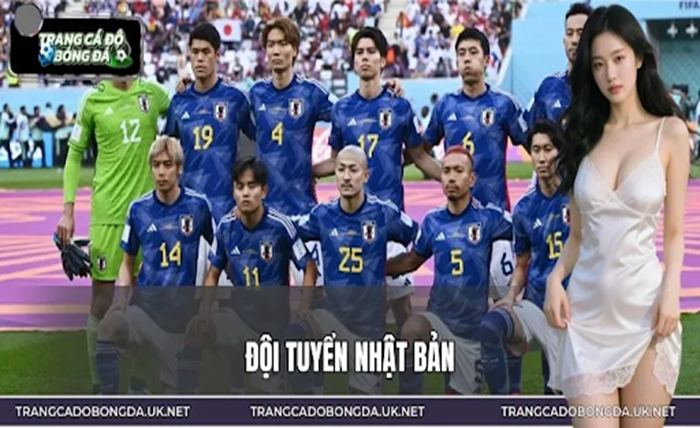
The Japan national football team enters the FIFA World Cup 2026 with high expectations after several years of impressive development. Under head coach Hajime Moriyasu, the Samurai Blue have established themselves as one of Asia’s strongest football nations. Their performances in recent international tournaments and qualification matches have shown that Japan possesses the quality, discipline, and tactical flexibility needed to compete against the world’s best teams.
trang cá độ bóng đá uy tín offers a secure platform, competitive odds, and fast payouts for players. It provides a wide range of football markets, live betting options, and reliable customer support. Trusted betting sites are licensed and transparent, ensuring a fair gaming experience while helping users enjoy football betting with confidence.
Japan qualified comfortably for the tournament and arrives in North America with a balanced squad featuring experienced leaders and exciting young talents. The team’s objective is clear: reach the latter stages of the World Cup and continue building on the success achieved in previous editions.
Japan’s Road to World Cup 2026
Japan became one of the earliest nations to secure qualification for the FIFA World Cup 2026. Their impressive qualifying campaign highlighted the depth and consistency of the squad. The team demonstrated excellent defensive organization while maintaining an attacking style built on quick passing and intelligent movement.
Coach Hajime Moriyasu has successfully blended experienced internationals with emerging stars, creating a squad capable of competing with top European and South American nations.
Goalkeepers Provide Stability
Zion Suzuki Leads the Goalkeeping Unit
One of Japan’s biggest strengths heading into the tournament is the presence of talented goalkeeper Zion Suzuki. The young shot-stopper has gained valuable experience in European football and is widely regarded as Japan’s first-choice goalkeeper.
KQBD (Football Results) is the fastest way for fans to stay updated with match outcomes from leagues around the world. It provides live scores, final results, goal details, and match statistics. Whether you follow domestic competitions or international tournaments, KQBD helps you track every football match quickly and accurately.
His reflexes, composure under pressure, and ability to play out from the back make him a crucial part of Moriyasu’s tactical system. Supporting him are experienced options such as Keisuke Osako and Tomoki Hayakawa, ensuring strong competition for places.
Depth in the Goalkeeping Department
Unlike previous tournaments where Japan heavily relied on one goalkeeper, the current squad offers multiple reliable options. This depth provides security in case of injuries or loss of form during the competition.
Having three capable goalkeepers allows the coaching staff to focus on tactical preparation without concerns about the position.
Defensive Strengths and Concerns
Experienced Defenders Form the Backbone
Japan’s defense combines experience and versatility. Players such as Takehiro Tomiyasu, Ko Itakura, Hiroki Ito, and Yuto Nagatomo bring leadership and international experience. Tomiyasu remains one of Asia’s most complete defenders due to his ability to play centrally or at full-back.
Veteran Yuto Nagatomo continues to provide leadership and valuable tournament experience. Meanwhile, Hiroki Ito and Ko Itakura offer physicality and technical quality that help Japan maintain possession from deep positions.
Injury Risks Could Affect Performance
Although the defensive unit is talented, injuries remain a concern. Several key defenders have experienced fitness issues in recent seasons. If Japan hopes to progress deep into the tournament, maintaining squad fitness will be essential.
The availability of Tomiyasu and other experienced defenders could significantly influence Japan’s defensive stability against elite attacking teams.
Midfield Quality Could Be Japan’s Biggest Weapon
Wataru Endo and Takefusa Kubo Drive Creativity
Japan possesses one of the strongest midfield groups in Asia. Captain Wataru Endo provides leadership, defensive discipline, and tactical intelligence. His experience playing at the highest level of European football makes him one of the team’s most important players.
Takefusa Kubo is expected to be Japan’s creative force. His dribbling ability, vision, and technical quality can unlock even the most organized defenses. Alongside players like Daichi Kamada, Ao Tanaka, Ritsu Doan, and Keito Nakamura, Japan has the midfield depth required to control matches.
Tactical Flexibility in Midfield
One major advantage for Japan is tactical flexibility. The midfielders are capable of operating in multiple systems, whether the team chooses a possession-based approach or a counterattacking strategy.
This adaptability allows Moriyasu to adjust tactics according to different opponents, a crucial factor during World Cup competition where teams face varying styles of play.
Attacking Options and Key Players
Daizen Maeda and Ayase Ueda Lead the Attack
Japan’s attacking unit combines pace, movement, and pressing intensity. Daizen Maeda is known for his relentless work rate and ability to stretch defenses with his speed. Ayase Ueda offers a strong presence in the penalty area and remains one of Japan’s primary goal-scoring threats.
Other attacking options such as Yuito Suzuki, Koki Ogawa, Keisuke Goto, and Kento Shiogai provide depth and different tactical profiles. This variety gives the coaching staff multiple solutions depending on the opposition.
Missing Kaoru Mitoma Is a Significant Blow
One of the biggest talking points surrounding the squad is the absence of Kaoru Mitoma due to injury. The Brighton winger has been one of Japan’s most influential players in recent years.
His pace, creativity, and ability to beat defenders in one-on-one situations would have added another dimension to Japan’s attack. Despite this setback, the squad still possesses enough talent to remain competitive.
Expectations for Japan at World Cup 2026
Japan has consistently progressed beyond the group stage in recent World Cups and now aims to break new ground. The team possesses a balanced squad, experienced leadership, and several players performing at top European clubs.
Group-stage qualification should be a realistic target, while a quarter-final appearance remains an achievable ambition. If key players stay healthy and perform at their best, Japan could emerge as one of the tournament’s surprise packages. Their combination of technical quality, tactical discipline, and team spirit makes them a dangerous opponent for any nation.
Conclusion
The Japan National Team Squad for World Cup 2026 reflects years of development and investment in football. With leaders such as Wataru Endo, creative stars like Takefusa Kubo, and talented attackers including Daizen Maeda and Ayase Ueda, the Samurai Blue have assembled a squad capable of competing on the world stage.
Although injuries have forced notable absences, particularly Kaoru Mitoma, Japan still possesses enough quality across every position to challenge strong opponents. If the team can maintain defensive organization and capitalize on its attacking opportunities, World Cup 2026 could become one of the most successful tournaments in Japan’s football history.